
Sitio de Social Bookmarking de Alta Autoridad para SEO Argentino en 2026 - A2Bookmarks Argentina
Bienvenido a A2Bookmarks Argentina, el principal sitio de social bookmarking creado para usuarios en todo el país. Este sitio de social bookmarking para Argentina te ayuda a guardar, organizar y compartir tus URLs y páginas web favoritas con nuestra plataforma fácil de usar. Este servicio es ideal para emprendedores y empresas argentinas que buscan mejorar su SEO y visibilidad online. Únete a nuestra comunidad entre los mejores sitios de social bookmarking argentinos para 2026 para descubrir contenido, conectar con otros y aumentar tu alcance. Nuestra plataforma apoya el intercambio enfocado en Argentina para construir autoridad y atraer tráfico segmentado. Optimiza tu participación online con A2Bookmarks Argentina, una opción confiable entre los mejores sitios de social bookmarking para el mercado argentino, mientras marcas estratégicamente para crecer tu presencia digital en Argentina.
Why Your Feet May Be the Missing Link in Your Recovery and Energy Strategy issuu.com
Most wellness conversations start at the shoulders and work their way down — posture, spine alignment, hip mobility, knee health. The foot, despite being the only body part in constant contact with the ground, rarely gets serious attention until something goes wrong.
That blind spot is increasingly costly. A growing body of research in exercise physiology, sports medicine, and bioelectrical science points to the foot-ground interface as a meaningful variable in fatigue, inflammation, sleep quality, and even cortisol regulation. What you put on your feet and what that material allows or blocks — matters more than most performance guides acknowledge.
This article unpacks why foot-to-ground contact is a legitimate wellness concern, what the science currently supports, and how to evaluate your footwear decisions with that understanding in mind.
The Bioelectrical Relationship Between Humans and the Earth
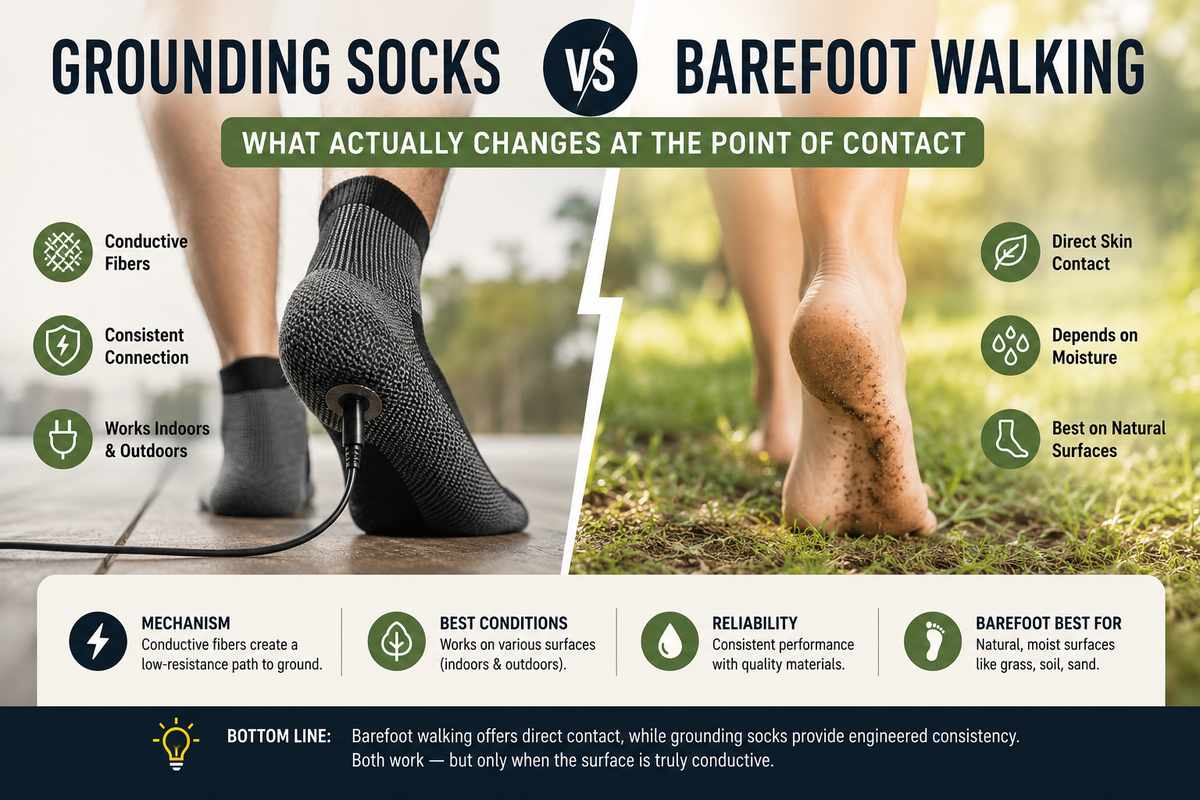
The Earth carries a mild, stable negative electrical charge. Human skin is a conductor. When bare skin contacts the ground directly, electrons transfer from the earth into the body a process studied under the term “grounding” or “earthing” in bioelectrical research.
This is not fringe science. Peer-reviewed studies published in the Journal of Inflammation Research, the Journal of Alternative and Complementary Medicine, and Frontiers in Physiology have examined physiological responses to grounding, including:
- Reduced markers of systemic inflammation
- Improved heart rate variability (HRV)
- Faster recovery from delayed onset muscle soreness (DOMS)
- Reduced cortisol dysregulation during nighttime sleep cycles
A 2019 pilot study in Health documented measurable reductions in inflammatory cytokines among participants who slept grounded versus those who did not. Another study tracked cyclists in the Tour de France, finding that grounded recovery using conductive mats and patches correlated with reduced muscle damage markers.
The mechanism proposed is electron transfer acting as a biological antioxidant, neutralizing free radicals involved in oxidative stress and chronic inflammation. Whether you fully accept this model or remain skeptical, the data points toward something worth understanding rather than dismissing.
Where Modern Footwear Creates a Problem
Standard rubber and synthetic shoe soles are electrical insulators. They completely block electron exchange with the ground — which is useful for electrical safety, but potentially consequential if grounding carries meaningful physiological benefit.
Consider how much of your day is spent wearing insulating footwear on insulating surfaces: rubber soles on concrete floors, synthetic carpet, polyurethane gym mats. For most urban adults, direct skin-to-earth contact is minimal, sometimes measured in minutes per week.
This disconnect is genuinely modern. Humans spent the vast majority of evolutionary history barefoot or wearing animal-hide footwear — both of which are electrically conductive. The insulating shoe is a twentieth-century invention that scaled globally without much consideration of its bioelectrical implications.
Grounding Footwear as a Practical Intervention
For people who cannot realistically spend hours barefoot outdoors — which describes most working adults — conductive footwear offers a practical bridge. Shoes designed with copper plugs, carbon-infused soles, or conductive leather patches allow electron exchange to occur while the wearer remains mobile and protected.
If you are evaluating options in this category, a well-researched starting point is the earthing shoes segment, which has expanded significantly in the past two years as consumer interest in recovery-oriented lifestyle products has grown.
These products vary considerably in construction quality, conductivity verification, and real-world durability. The most reliable options feature:
- Tested conductivity (measured in ohms) rather than implied
- Natural leather or hemp uppers to complement the conductive sole
- Outdoor-appropriate sole thickness for actual use
- Third-party validation of grounding claims
Not all products marketed as “grounding footwear” meet these criteria. Scrutinize product specifications the same way you would any other biohacking or recovery device.
Comparing Grounding Methods: Practical Tradeoffs
| Method | Convenience | Duration Possible | Cost Range | Research Support |
|---|---|---|---|---|
| Bare feet on natural ground | Low (weather, terrain) | Variable | None | Strongest |
| Grounding mats (indoor) | High | Long (sleep, desk use) | $30–$150 | Moderate |
| Grounding wristbands | High | All-day | $20–$80 | Moderate |
| Conductive footwear | High | All-day walking | $80–$250 | Emerging |
| Standard footwear | Very high | All-day | $50–$300 | N/A (blocks grounding) |
What the Research Does Not Yet Confirm
Intellectual honesty requires acknowledging limitations. Most published grounding studies use small sample sizes. Blinding participants in earthing research is notoriously difficult — it is hard to not know whether your feet are touching the ground. Placebo effects likely contribute to some self-reported outcomes.
No regulatory body has approved grounding as a medical treatment. Claims that it reverses chronic illness, replaces sleep aids, or functions as a standalone therapeutic protocol exceed what the current evidence supports.
What the data does suggest, more consistently, is that grounding appears to support rather than replace conventional recovery methods: adequate sleep, balanced nutrition, progressive training, and stress management.
Think of it as a recovery amplifier with a low risk profile and growing mechanistic plausibility — not a replacement for foundational habits.
Practical Steps to Test Grounding for Yourself
If you want to explore this personally before investing in specialized gear:
- Establish a baseline. Track sleep quality, morning soreness, and energy levels for two weeks using your current routine.
- Introduce daily barefoot outdoor time. Even 20–30 minutes on grass, soil, or sand produces measurable skin conductance changes.
- Evaluate how you feel at two weeks. HRV data from a wearable provides objective feedback beyond perception.
- Consider conductive footwear if barefoot time is impractical. Select products with verified specifications.
- Stack with existing recovery tools. Grounding works best alongside quality sleep, hydration, and appropriate training load — not as a substitute.
Frequently Asked Questions
Does walking on concrete count as grounding?
No. Concrete, especially sealed or painted concrete, acts as an insulator. Grass, soil, sand, and unpainted concrete that is wet can conduct electrons.
Can grounding interfere with pacemakers or other medical devices?
The electrical currents involved in passive grounding are extremely low far below levels relevant to implanted devices. However, anyone with an implanted device should consult their cardiologist before using active grounding systems (those plugged into electrical outlets).
How long does a grounding session need to be to produce effects?
Studies showing measurable inflammation changes generally used 30–90 minute sessions, though some research on sleep used all-night grounding. Short daily sessions appear more beneficial than infrequent long ones.
Conclusion
The foot-ground relationship is one of the less-discussed variables in modern wellness, but its neglect reflects habit and convenience more than evidence. The electrical disconnect created by insulating soles is a genuinely novel aspect of contemporary life, and emerging research suggests it may not be entirely benign.
You do not need to overhaul your lifestyle to explore this. Start with soil. Add barefoot time where terrain and climate allow. If your schedule makes that difficult, evaluate your footwear options critically and systematically. The science is not settled, but it is compelling enough to take seriously and the barrier to experimentation is low.
Your feet have been waiting for this conversation
Related Stories
- The Hidden Problem With Most Men’s Barefoot Leather...
- From AI Hype to Measurable ROI in 2026
- How To Choose the Right Love Marriage Specialist...
- How To Consult A Love Specialist Astrologer
- Why Choose Apptunix for AI Product Engineering?
- Top Natural Stone Cladding Ideas to Transform Your...
- When Trusted Tools Become Threats: Rethinking Enterprise Security
- Full Stack QA Testing—Your Competitive Edge in Modern...
- Installation Guide for Fully Automatic Sanitary Napkin Machine
- Global Water Bed (Waterbeds) Market Trends & Forecast...
Recent Stories

-
9 views The Hidden Problem With Most Men’s Barefoot Leather Sandals band.us
-
29 views How TinyML Is Making AI Faster, Smarter, and More Sustainable mooglelabs.com
-
25 views Enterprise eCommerce Success Starts with Quality Engineering bugraptors.com
-
32 views Scaling Enterprise AI Requires More Than Intelligent Agents mooglelabs.com
-
38 views Why Governance Matters for Autonomous AI Agents mooglelabs.com